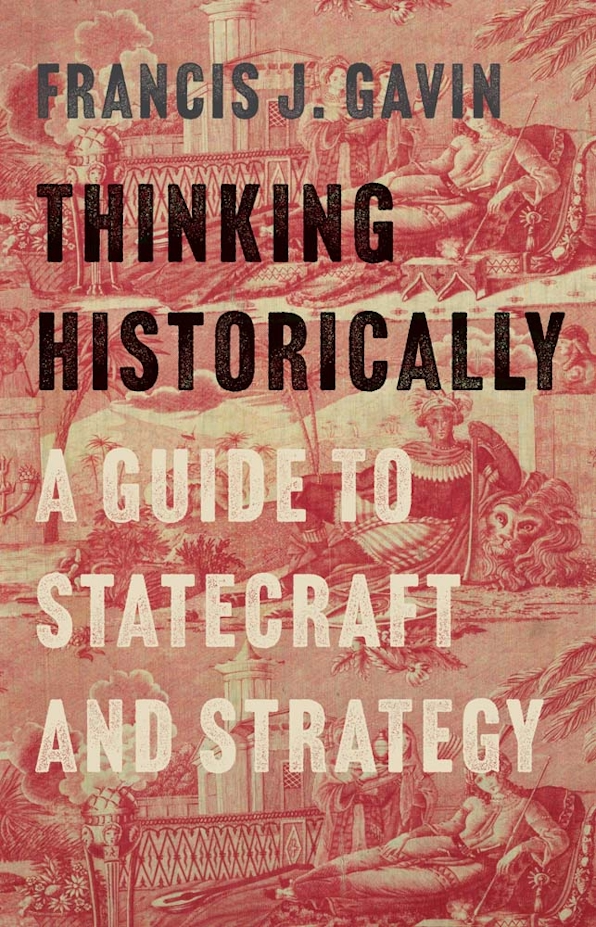
Thinking Historically: A Guide to Statecraft and Strategy
A compelling and insightful argument for historical study as a way to understand and navigate the complex, often confusing world of decision-making
It seems obvious that we should use history to improve policy. If we have a good understanding of the past, it should enable better decisions in the present, especially in the extraordinarily consequential worlds of statecraft and strategy. But how do we gain that knowledge? How should history be used? Sadly, it is rarely done well, and historians and decision-makers seldom interact. But in this remarkable book, Francis J. Gavin explains the many ways historical knowledge can help us understand and navigate the complex, often confusing world around us.
Good historical work convincingly captures the challenges and complexities the decisionmaker faces. At its most useful, history is less a narrowly defined field of study than a practice, a mental awareness, a discernment, and a responsiveness to the past and how it unfolded into our present world—a discipline in the best sense of the word. Gavin demonstrates how a historical sensibility helps us to appreciate the unexpected; complicates our assumptions; makes the unfamiliar familiar and the familiar unfamiliar; and requires us, without entirely suspending moral judgment, to try to understand others on their own terms. This book is a powerful argument for thinking historically as a way for readers to apply wisdom in encountering what is foreign to them.
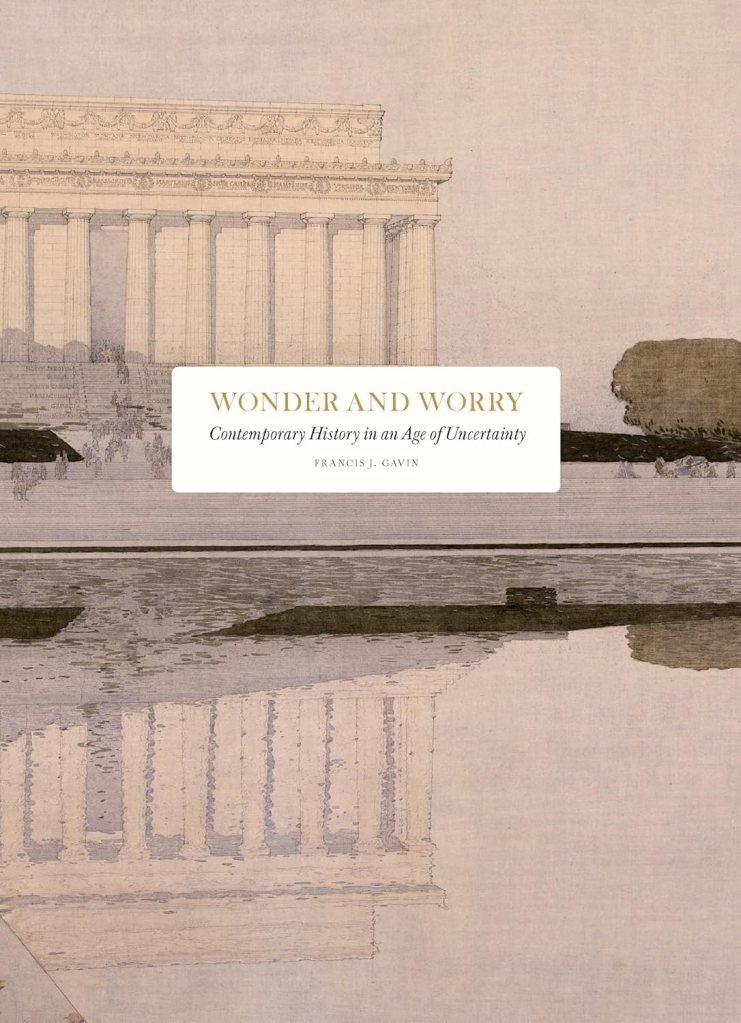
Wonder and Worry: contemporary history in an age of uncertainty
The current global order appears to be collapsing. Long forgotten challenges, such as the return of great power competition and the specter of nuclear war, demand fresh attention, while novel, complex, and menacing planetary crises ranging from climate and disease to emerging technology loom. Meanwhile, the United States—the most consequential nation in the international system, behaves erratically and seems willing to abandon its decades-long strategy of building strong alliances, countering authoritarianism and supporting openness. Legacy institutions, and in particular, elite universities, appear unable to meet the moment and provide the scholarly insight and training needed to navigate this new world. How should we understand these unsettling trends?
Wonder and Worry offers Francis J. Gavin’s best insights on the pressing, fundamental questions we face. What is the state of world politics and the international system? What has been and should be America’s role in the global order? And what is the most effective way to evaluate, generate insight, and teach the next generation how to answer the first two questions? Gavin’s answers are nuanced, counterintuitive, and often surprisingly optimistic. Wonder and Worry is an incisive and accessible contemporary history for our uncertain age.
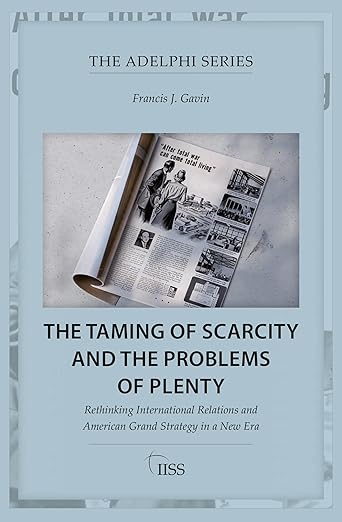
The Taming of Scarcity and the Problems of Plenty: Rethinking International Relations and American Grand Strategy in a New Era
The underlying structure, incentives and costs shaping international relations, state behaviour and the nature of power are profoundly different today to how they were in the past, in ways that are scarcely recognised and widely misunderstood. For much of history, world politics was marked by profound scarcity in resources, information and security. A series of historical revolutions has largely tamed this scarcity in ways few could have imagined. These revolutions, however, have generated new, potentially catastrophic challenges for the world – the problems of plenty.
In this Adelphi book, Francis J. Gavin argues that the institutions, practices, theories and policies that helped explain and largely tamed scarcity by generating massive prosperity, and which were sometimes used to justify punishing conquest, are often unsuitable for addressing the problems of plenty. Successful grand strategy in this new age of abundance requires new thinking. New conceptual lenses, innovative policies and processes, and transformed institutions will be essential for confronting and solving the problems of plenty, without undermining the expanding efforts against scarcity.
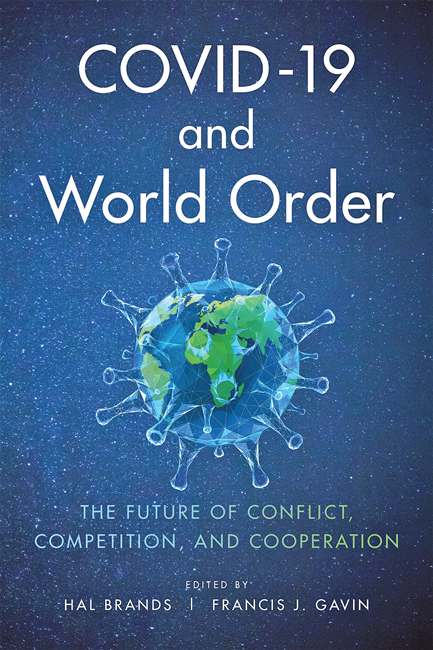
COVID-19 and World Order: The Future of Conflict, Competition, and Cooperation Co-editor, with Hal Brands
The ongoing COVID-19 pandemic has killed hundreds of thousands of people and infected millions while also devastating the world economy. The consequences of the pandemic, however, go much further: they threaten the fabric of national and international politics around the world. As Henry Kissinger warned, “The coronavirus epidemic will forever alter the world order.” What will be the consequences of the pandemic, and what will a post-COVID world order look like? No institution is better suited to address these issues than Johns Hopkins University, which has convened experts from within and outside of the university to discuss world order after COVID-19. In a series of essays, international experts in public health and medicine, economics, international security, technology, ethics, democracy, and governance imagine a bold new vision for our future.

Nuclear Weapons and American Grand Strategy
In his latest book, Professor Francis J. Gavin explores what we know—and don’t know—about how nuclear weapons shape American grand strategy and international relations. Gavin argues that scholarly and popular understanding of many key issues about nuclear weapons is incomplete at best and wrong at worst. Among these important, misunderstood issues are: how nuclear deterrence works; whether nuclear coercion is effective; how and why the United States chose its nuclear strategies; why countries develop their own nuclear weapons or choose not to do so; and, most fundamentally, whether nuclear weapons make the world safer or more dangerous.
Chaos in the Liberal Order: The Trump Presidency and International Politics in the Twenty-First Century Co-editor, with Robert Jervis, Joshua Rovner, and Diane Labrosse
Donald Trump’s election has called into question many fundamental assumptions about politics and society. Collecting a wide range of perspectives from leading political scientists, historians, and international-relations scholars, Chaos in the Liberal Order explores the global trends that led to Trump’s stunning victory and the impact his presidency will have on the international political landscape.
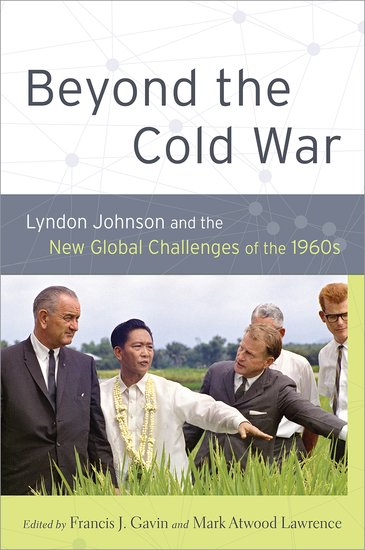
Beyond the Cold War: Lyndon Johnson and the New Global Challenges of the 1960s Co-editor, with Mark Lawrence
In writing about international affairs in the 1960s, historians have naturally focused on the Cold War. Only recently have scholars begun to realize that there is another history of international affairs in the decade. Many of the global challenges we face today – energy dependence, epidemic diseases, massive increases in trade and monetary flows, for example – first drew serious attention in the 1960s. Beyond the Cold War examines how the Johnson presidency responded to these problems and draws out the lessons for today.
Nuclear Statecraft: History and Strategy in America’s Atomic Age
In Nuclear Statecraft, Francis J. Gavin challenges key elements of the widely accepted narrative about the history of the atomic age and the consequences of the nuclear revolution.On the basis of recently declassified documents, Gavin reassesses the strategy of flexible response, the influence of nuclear weapons during the Berlin Crisis, the origins of and motivations for U.S. nuclear nonproliferation policy, and how to assess the nuclear dangers we face today. In case after case, he finds that we know far less than we think we do about our nuclear history. Archival evidence makes it clear that decision makers were more concerned about underlying geopolitical questions than about the strategic dynamic between two nuclear superpowers.
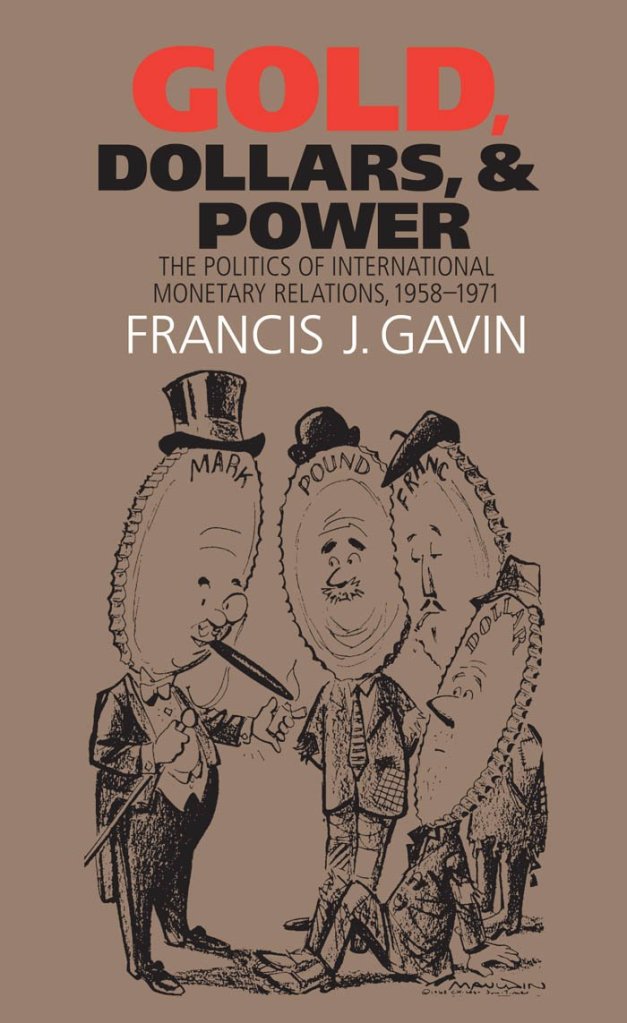
Gold, Dollars, and Power: The Politics of International Monetary Relations, 1958-1971 by Francis J. Gavin
How are we to understand the politics of international monetary relations since the end of World War II? Exploiting recently declassified documents from both the United States and Europe and employing economic analysis and international relations theory, Francis Gavin offers a compelling reassessment of the Bretton Woods system of fixed exchange rates and dollar-gold convertibility. Gavin demonstrates that, contrary to the conventional wisdom, Bretton Woods was a highly politicized system that was prone to crisis and required constant intervention and controls to continue functioning. More important, postwar monetary relations were not a salve to political tensions, as is often contended. In fact, the politicization of the global payments system allowed nations to use monetary coercion to achieve political and security ends, causing deep conflicts within the Western Alliance. For the first time, Gavin reveals how these rifts dramatically affected U.S. political and military strategy during a dangerous period of the Cold War.
The New York Times 20th Century in Review: The Cold War Editor
The Cold War was a period of great tension and activity. One way to get a feel for the ebb and flow of events is to read the newspaper articles of the time. The articles in this two-volume collection, all from the New York Times, which is generally regarded as the newspaper of record for the United States, can be considered primary historical documents. The first two parts cover the origins of the Cold War, which coincided with the growing power of the United States and U.S.S.R. (1918-47). The remaining seven sections are arranged by broad subject category (e.g., great crises, detente, Vietnam). Within each section, the articles are arranged in chronological order. Also included are the texts of selected speeches, declarations, and other documents. Although international affairs naturally predominate, some articles focus on internal issues.
The Presidential Recordings: John F. Kennedy – The Great Crises, vol. I and II Associate Editor, with Timothy Naftali, Ernest May, and Philip Zelikow
These volumes provide a unique glimpse into the real workings of the Kennedy White House, presenting perhaps the most reliable record of the Kennedy presidency ever published. In the summer of 1962, President John F. Kennedy installed a secret taping system in the White House. His aim was to record meetings and conversations he considered important, probably intending to use them when he wrote the memoir of his years in office, a book he never had the chance to write. The tapes are now being authoritatively transcribed, and those for the period from the installation of the tape system through October 28, 1962 (the end of the Cuban missile crisis), are presented here in their entirety.
 Francis J. Gavin